
Don't Get Caught Off Guard by Philadelphia's Property Tax Hikes
If you own property in Philadelphia, that new assessment notice in your mailbox deserves your attention.
On The Real Estate Show with Pat Lopez, Philadelphia real estate attorney Alan Nochumson joined Pat to break down what the city's latest property reassessments could mean for homeowners, investors, and landlords. The big takeaway? A higher assessment can mean a noticeably higher monthly housing expense—and waiting too long to respond could limit your options.
Philadelphia has completed its Tax Year 2027 citywide revaluation, and the new assessments take effect January 1, 2027. So, what should property owners be doing right now?

1. Should You Appeal Your Philadelphia Property Tax Assessment?
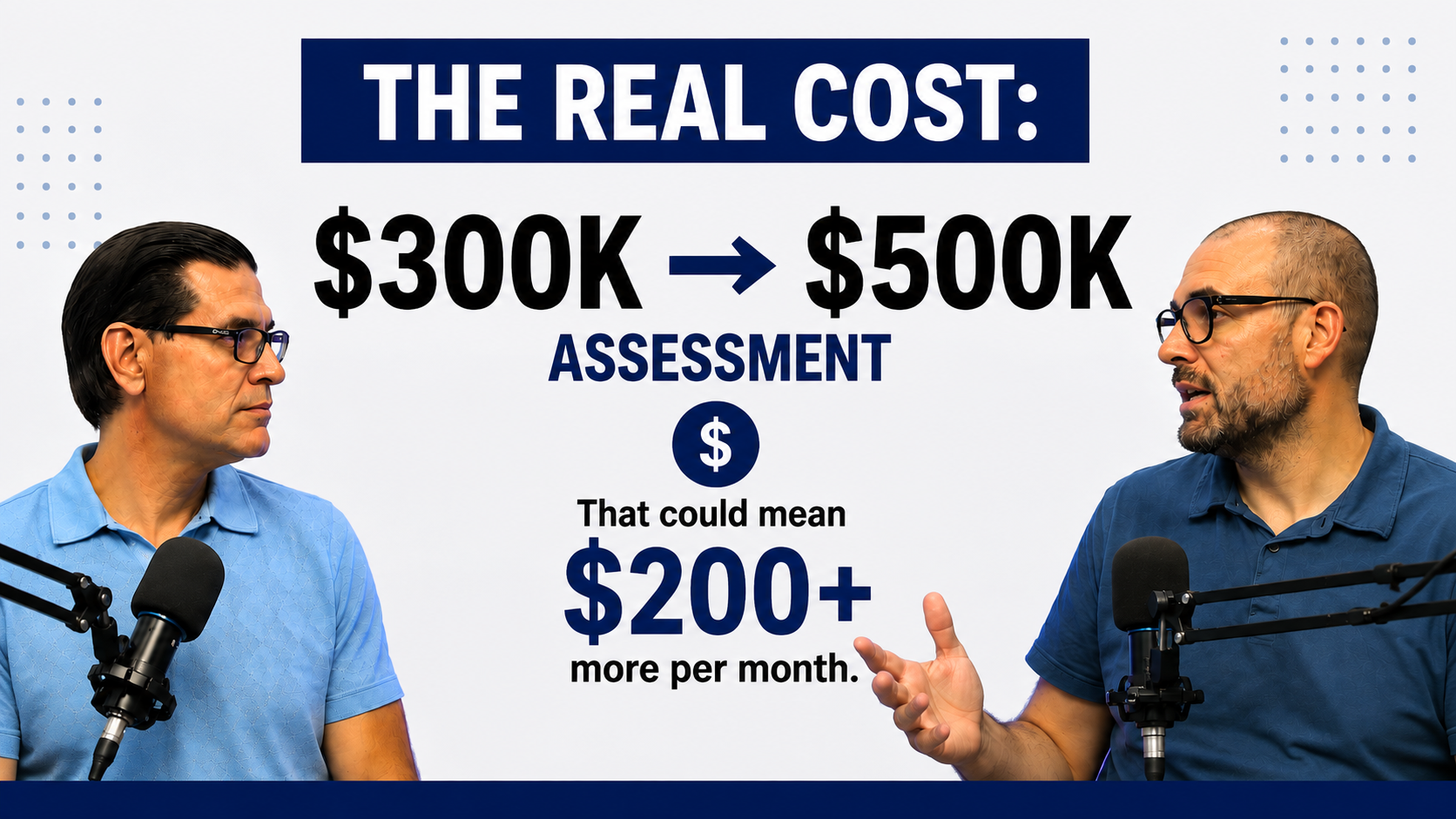
Before filing an appeal simply because your assessment increased, Alan recommends starting with one question:
What is your property actually worth?
Suppose your Philadelphia home was previously assessed at $300,000 and is now assessed at $500,000. Using the city's current 1.3998% Real Estate Tax rate, a $500,000 taxable assessment before exemptions or abatements would produce roughly $7,000 in annual property tax.
That's a substantial jump in housing costs.
But an increase alone doesn't necessarily mean you have a strong appeal. If comparable sales and other evidence indicate the property really is worth $500,000, challenging the assessment may not produce the result you want.
As Alan explained, owners need evidence supporting a different value. That could include a professional appraisal, market analysis, comparable properties, photographs, or evidence that the city has incorrect information about the property.
Philadelphia's official guidance similarly says an appeal can challenge an inaccurate market value, a lack of uniformity with similar properties, or substantially incorrect property characteristics.
The lesson: Don't appeal just because the number is uncomfortable. First determine whether the number is inaccurate.
2. What Philadelphia Property Tax Appeal Deadlines Matter?
This is where homeowners really don't want to get caught off guard.
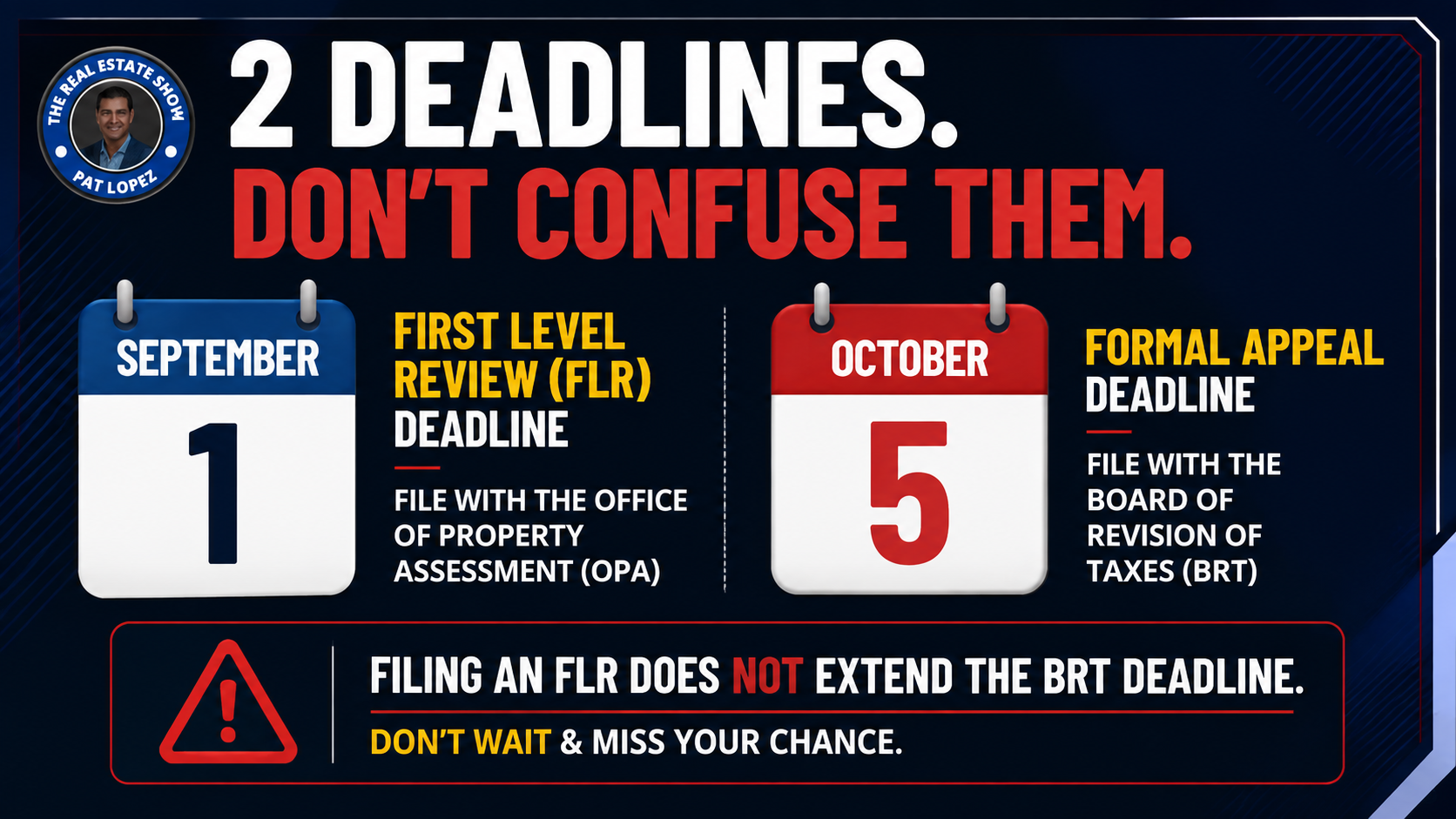
There are two separate processes and two important 2026 deadlines for Philadelphia's 2027 assessments:
September 1, 2026: Deadline to request a First Level Review (FLR) through the Office of Property Assessment (OPA).
October 5, 2026: Deadline to file a formal market-value appeal with the Board of Revision of Taxes (BRT).
And here's the important part: filing an FLR does not extend the BRT deadline.
That means you shouldn't file the First Level Review and assume you can simply wait for its outcome before worrying about a formal appeal. Philadelphia explicitly says owners can pursue both and do not have to wait for an FLR decision before filing with the BRT.
As Alan warned during the podcast, missing that distinction can create a serious problem for a property owner with an otherwise legitimate case.
So, circle those dates now: September 1 and October 5.
3. How Else Can Philadelphia Homeowners Reduce Their Property Taxes?

An assessment appeal isn't the only way to potentially lower your bill.
One of the simplest places for owner-occupants to start is checking whether they're receiving the Homestead Exemption.
Pat shared the story of a borrower who had lived in his primary residence for seven or eight years but hadn't taken advantage of the exemption. Over several years, overlooking available tax relief can add up to real money.
Philadelphia also offers additional property tax relief programs for qualifying residents, including programs based on factors such as income, age, or increases in property assessments.
The City is encouraging homeowners to review these programs as the 2027 assessments roll out. If you're eligible for relief but haven't applied, you're potentially paying more than necessary.
The broader point from the episode is simple: don't assume your tax bill is automatically correct or that there are no options available.
Review your assessment. Check your property's estimated market value. Confirm which exemptions or relief programs you're receiving. And if the assessment appears inaccurate, start gathering supporting evidence before the deadlines arrive.
For investors and landlords, there's another reason to stay alert. Alan and Pat also discussed rising zoning-related costs and evolving Philadelphia rental regulations—reminders that the cost and compliance landscape for city real estate continues to change.
Philadelphia real estate can still present tremendous opportunities, but informed owners have an advantage.
Watch the full episode of The Real Estate Show with Pat Lopez
Did you get a Philadelphia property tax reassessment notice? Learn the exact steps to appeal your assessment and potentially lower costs.
Property owners across Philadelphia are receiving new assessment notices, leading to confusion about how these numbers impact tax bills. This guide explains the relationship between your property value and the $1,400 tax rate per $100,000 of assessed value. If you believe your residential property is overvalued, knowing how to file a property assessment appeal is critical.
We break down the city-wide reassessment process and what documentation is required to challenge a valuation. Understanding your rights when you receive a Philadelphia reassessment notice can save you thousands. Whether you are a first-time homeowner or a seasoned investor, this overview helps you determine if your property tax appeal is worth the effort.
Important: This article is for general informational purposes and isn't legal or tax advice. Property owners should confirm current requirements with the City of Philadelphia or an appropriate professional.