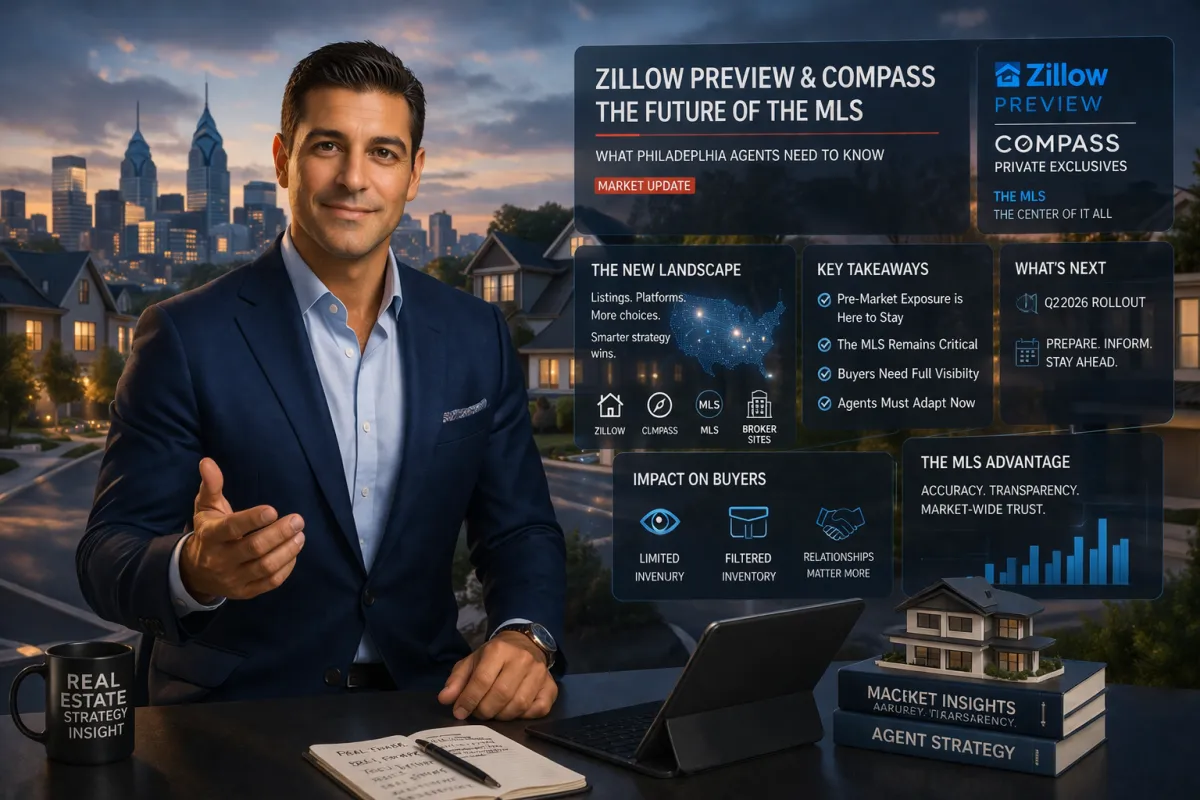
Zillow Preview, Compass, and the Future of the MLS: What Philadelphia Agents Need to Know Right Now
If you've been watching the headlines in real estate lately, you've seen a lot of noise around Zillow, Compass, and the MLS. But what does it actually mean — for you as an agent, for your buyers, and for the Philadelphia market specifically?
In the latest episode of The Real Estate Show with Pat Lopez, I sat down with Chris Somers — head of the Somers Team at KW Empower, one of the most plugged-in agents in the Philadelphia market — for a real, unfiltered breakdown of everything that just happened. Chris has been a Zillow partner for years, he's on the board of GAR, and he has 30% market share in his territory through KW Empower. When Chris talks about how these moves shake out on the ground, it's worth listening.
This is not theoretical. The rollout starts in Q2 2026. Here's what you need to know.
🎬 Watch the full episode here:
What Zillow Just Announced — and What Triggered It
On March 17, Zillow launched Zillow Preview — a new pre-marketing product that lets agents in partner brokerages display listings exclusively on Zillow and Trulia before they go live on the MLS. The launch partners are Keller Williams, RE/MAX, and Berkshire Hathaway HomeServices, with more independents being added.
The rollout begins in early Q2, with agents in those brokerages able to post preview listings for up to 90 days before active status.
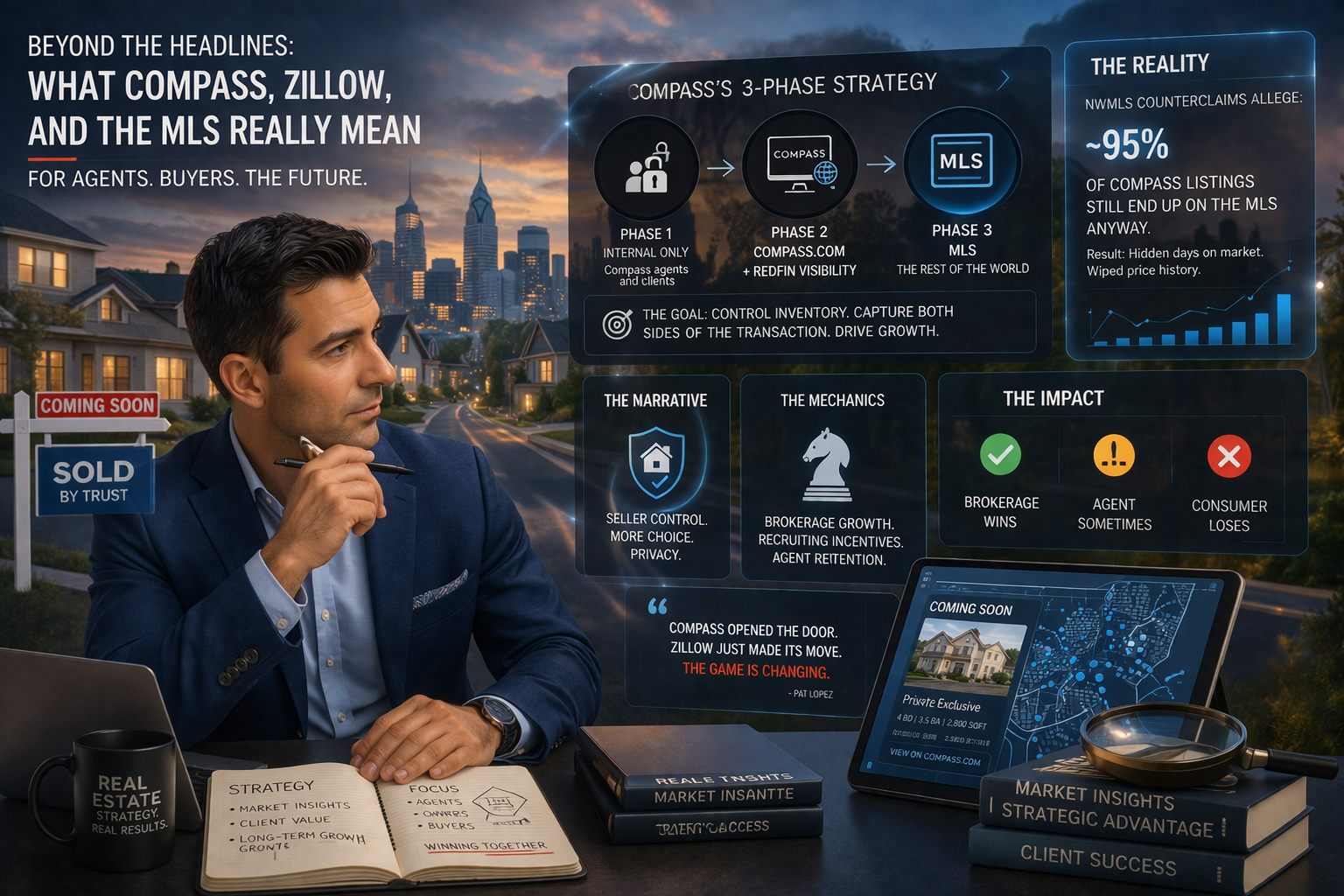
But why did Zillow do this? As Chris put it plainly in our conversation: Compass opened the door. Compass's three-phase marketing strategy — internal only, then Compass.com, then MLS — essentially proved to the industry that there's consumer demand for pre-market access. Once Compass partnered with Redfin and Rocket to distribute those coming-soon listings, Zillow read the chess board and made their counter move.
"I think Zillow is kind of forced into it in a way," Chris said. "Compass kind of proved to them that there is a value of this coming soon. So basically they incorporated that — and then partnered with the people that they partnered with."
The key distinction Zillow is drawing: their Preview listings are publicly visible to any consumer on Zillow or Trulia. No registration wall. No brokerage requirement. That's what they say separates it from Compass's model — which, at its core, routes buyers through Compass agents to access inventory.
What Compass Was Really Trying to Do
Let's be honest about what Compass's three-phase strategy was designed to accomplish — because it wasn't primarily about seller privacy.
Phase 1: Internal only, Compass agents and clients. Phase 2: Compass.com, now with Redfin visibility. Phase 3: MLS — the rest of the world.
The narrative was seller control. The mechanics, as Chris and I discussed, were something else. "I think it was also a play to potentially double pop," I said during the episode — meaning capture both sides of the transaction by keeping the listing inside the Compass ecosystem before it ever hits the open market. Add in recruiting incentives and agent retention plays, and you've got a strategy built around brokerage growth, not consumer benefit.
Chris agreed: "Is Compass a tech company? No. They're a real estate brokerage. That was kind of a facade."
And the data backs this up. NWMLS's counterclaims against Compass, filed just this month, allege that Compass listings fail to sell during the private phases roughly 95% of the time — meaning the vast majority of those "exclusive" listings end up on the MLS anyway, just with hidden days on market and wiped price history along the way.
There are legitimate use cases for coming-soon listings — privacy, tenant-occupied properties, construction, generating open-house momentum. Here in the Philadelphia area, Bright MLS already allows coming-soon status, so this was never the crisis it was in markets where the MLS prohibits it. But as a systematic strategy applied to all listings? It serves the brokerage more than the seller.
What Happens to the MLS Now?
This is the question everyone's asking — and the honest answer is: not much changes immediately, but the long-term pressure is real.
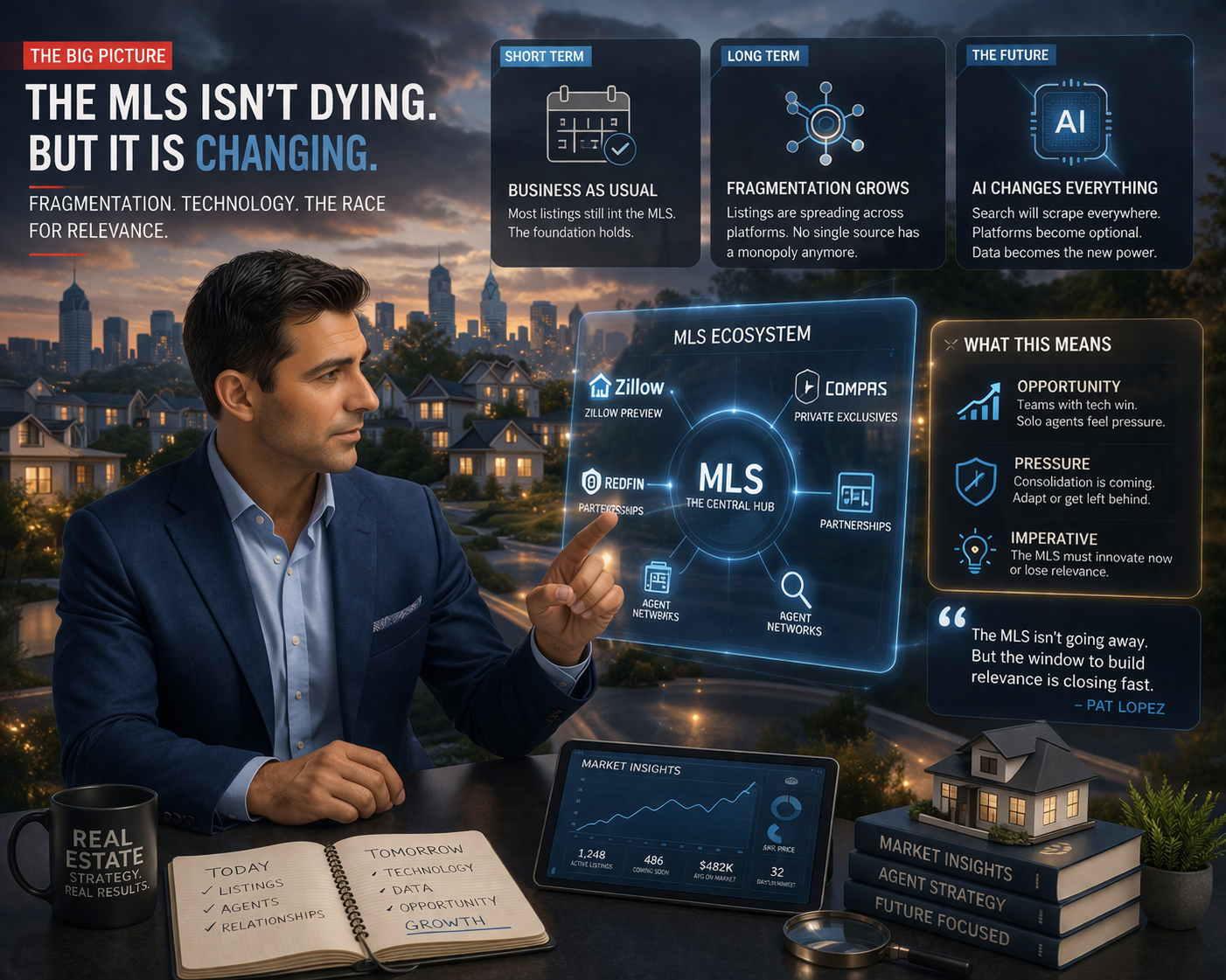
"In the short term, very little, if any," I said in the episode. Chris agreed. The MLS isn't going anywhere in the near term. Most listings will still flow through it on day one, just as they always have.
But the fragmentation is beginning. David Snyder, the operating principal of KW Empower — which holds roughly 30% market share in the Philadelphia area — put it directly: "This will ultimately lead to the end of the independent." Not overnight. But the consolidation pressure on solo agents and small brokerages is accelerating.
As Chris described it, the MLS is starting to look a little like the rental market — listings fragmented across platforms, some here, some there, some never making it to the central feed at all. "The value to the MLS is still very much there," Chris said, "but to some degree it kind of gets a little more fragmented."
The bigger long-term threat, frankly, isn't even Zillow or Compass. It's AI. At some point, search tools will simply scrape the entire internet for property data and assemble it without any platform acting as gatekeeper. The MLS needs to invest aggressively in technology and agent-facing tools right now — not because they're dying today, but because the window to build durable relevance is narrowing.

How This Impacts Buyers — and Why It's Not Good for Them
Let's be clear about something: the consumer is not the winner here.
Right now, a buyer can go to Zillow and see almost everything on the market. That's been the model for twenty years. What's coming is a fragmented landscape where some listings are on Zillow Preview, some are in Compass's private phase, some are on Redfin via the Compass-Rocket deal, some are on Realtor.com through eXp's non-exclusive partnership, and some are on the MLS.
"It's gonna make things a little trickier for them," I said in the episode. "They just can't go to one place and see everything."
As Chris put it: "These properties might be gobbled up by the time they hit the market. So the consumer kind of gets hurt there — which they've already been hurt" by the Compass model.
In Philadelphia specifically, we're still 45% below 2019 inventory levels. New Jersey is down 65%. When there are 16 offers on a property over a weekend — which I've seen with my own clients recently — buyers who don't have agents with access to pre-market inventory are already behind before the listing goes live. This fragmentation makes that gap wider.
The practical takeaway for buyers: having an agent affiliated with one of the major partner brokerages — KW, RE/MAX, Berkshire — is now a meaningful competitive advantage. They'll have Zillow Preview access, pre-market visibility, and relationships with listing agents that solo buyers simply can't replicate on their own.

What This Means for Agents — Winners, Losers, and the Big Shift
The winners here are clear: large teams at partner brokerages. Chris was direct about this. "Between me and you and our market, the value for a Compass, RE/MAX, or KW agent just went up dramatically."
Zillow Preview listings come with algorithmic priority on the platform. Agents at partner brokerages get first-position lead routing when a consumer inquires on a Preview listing. There's a revenue sharing component built in — meaning listing agents have a financial incentive to put listings through as Preview before going fully active, even if it's just for a few days. And Zillow's 235 million monthly unique visitors means that traffic advantage is not small.
The losers are the independent agents and small brokerages who aren't plugged into these ecosystems. "It's making it harder for mom and pop — the solo agent who isn't on a big team, who doesn't have the budget for Zillow Flex," I said. A seller interviewing agents is going to start asking: will my listing get Zillow Preview exposure? If the answer is no, that's a listing presentation problem.
The practical implication for newer agents especially: joining a team isn't just about mentorship and leads anymore. It's about infrastructure access. The gap between a solo agent and a team-affiliated agent in terms of what they can offer a seller is getting wider, fast.
One Important Reality Check: This Is a Seller's Market Problem
Here's something Chris and I want to make sure doesn't get lost in all of this: preview strategies, private listings, and coming-soon plays only matter when inventory is tight and sellers have leverage.
If we're back in 2009 — or if you're in Austin right now with nine months of inventory, or on the west coast of Florida where supply is already back above 2019 levels — none of this matters. You're not doing private listings when you're begging buyers to come see the house. You're blasting it everywhere from day one.
The northeast, and Philadelphia specifically, is still in a supply-constrained market. That's why this conversation is relevant here. But agents should be paying attention to inventory trends in their specific markets — because the moment the market tips, the entire incentive structure around pre-marketing flips.
The Bottom Line for Philadelphia Real Estate Professionals
The biggest shift here isn't Zillow's announcement. It's the direction the whole industry is heading: toward a world where listing access, platform relationships, and team affiliation determine what inventory you can offer — and how competitive your positioning is.
More will be revealed, as Chris kept saying throughout our conversation. The rollout is just starting. But the agents and investors who understand the structure of what's changing right now are going to be far better positioned than those who catch up to it later.
Want to stay ahead of moves like this every week? Join Pat's free Power Hour Mastermind — a live real estate strategy session where Philadelphia agents, investors, and buyers get direct access to insights like these, without the fluff.

👉 Reserve your free seat here →
📺 Subscribe to The Real Estate Show on YouTube: youtube.com/@therealestateshowwithpatlopez
📲 Follow Pat: Instagram | TikTok | Facebook | LinkedIn
The views expressed in this post reflect insights shared on The Real Estate Show with Pat Lopez and are intended for informational purposes only. Please consult a licensed real estate professional regarding your specific situation.